The dance company Amalia Hernández built
The dance company Amalia Hernández built
One choreographer, 1952
The folklórico tradition now performed at the Palacio de Bellas Artes traces back to 1952, when Mexican choreographer Amalia Hernández founded a folk-dance ensemble that grew from eight dancers to fifty within a decade. Her company represented Mexico at the 1959 Pan American Games in Chicago and went on to tour more than 80 countries — one of the reasons "ballet folklórico" became internationally shorthand for Mexican folk dance staged for the theatre.
Folk dance, staged and choreographed
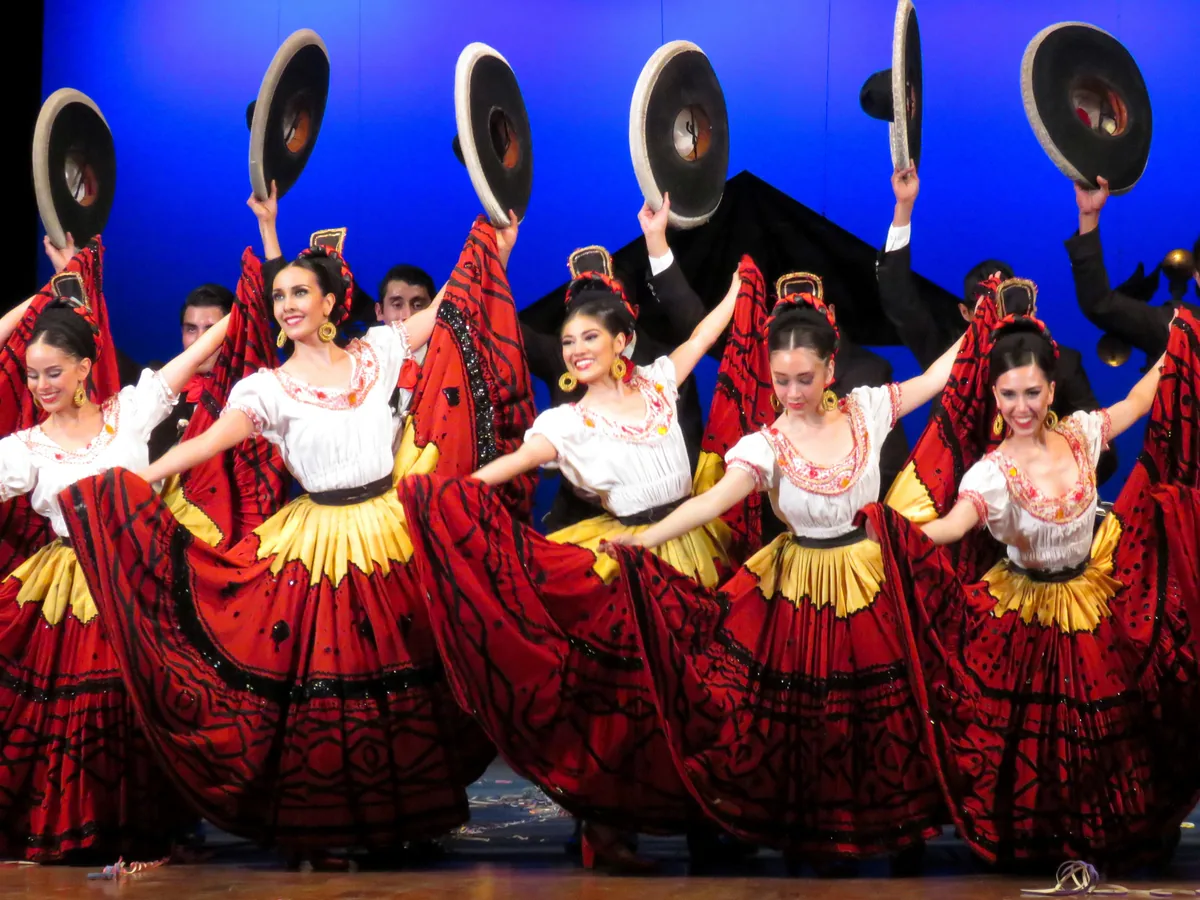
Ballet folklórico isn't a single village dance preserved unchanged — it's regional folk traditions researched, choreographed and staged for a proscenium theatre, with live orchestral music and elaborate regional costume, performed by a trained company rather than a community troupe. That theatrical reworking is exactly what makes it legible to an audience seeing several of Mexico's dance regions back to back in one evening, something no single regional festival offers.
A regular fixture at Bellas Artes
Folklórico companies perform in the Palacio's main theatre several times a week, presenting pre- and post-Hispanic Mexican dance to a nightly audience that's overwhelmingly visitors rather than locals — which is also why the show, the building and the ticket are usually thought of as a single Mexico City must-do rather than three separate decisions.
The regions you'll see
The regions you'll see
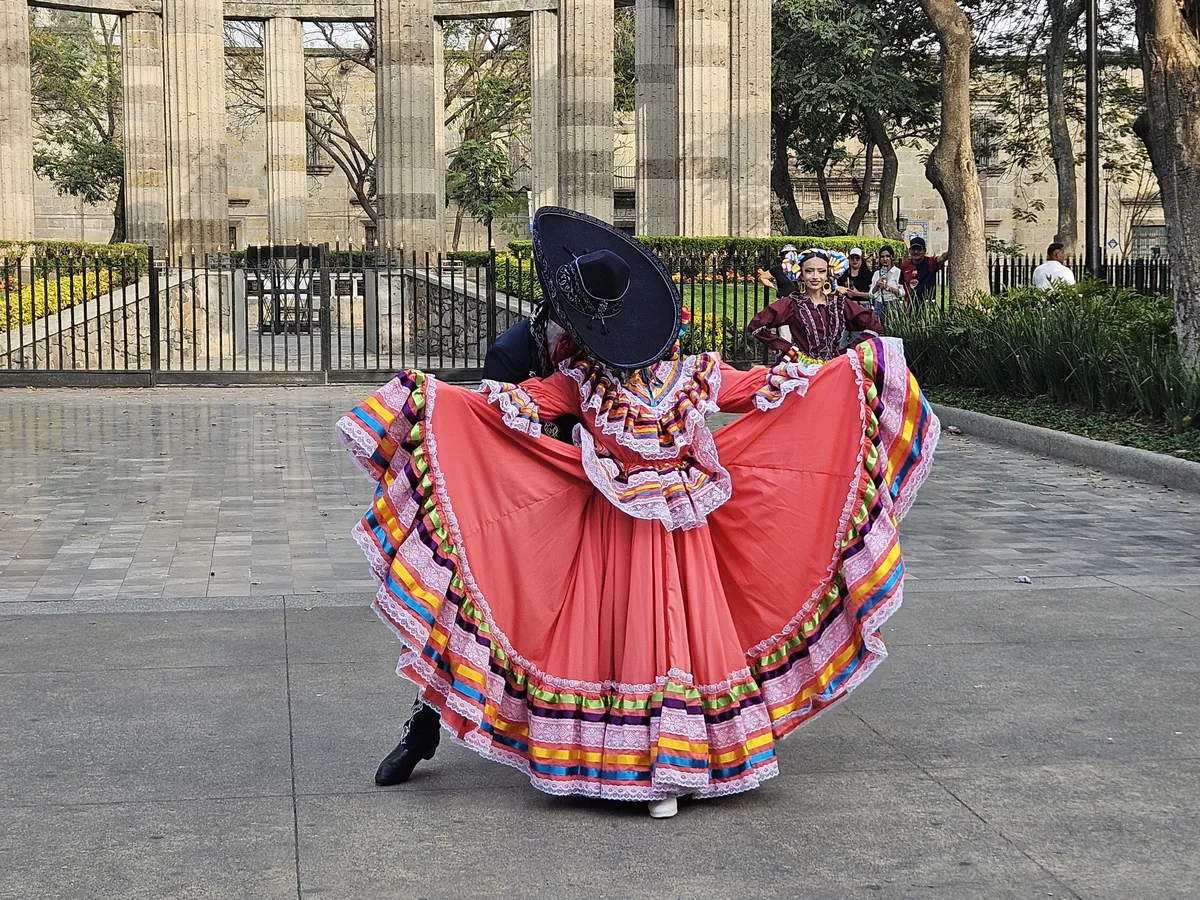
A folklórico programme moves through several of Mexico's dance regions in one evening — each with its own costume, rhythm and story. The exact running order varies by performance, but this is the canon a programme like this one is built from.
The wide red-and-green skirt, the charro suit, the courtship footwork — this is the dance most people picture when they hear "Mexican folk dance," and the one that became Mexico's National Dance in 1924.
White lace dresses and guayaberas, harp and jarana guitars, and a rhythm with African, Spanish and Indigenous roots — the same musical family that produced "La Bamba."
Dancers in carved old-man masks and hunched postures suddenly break into fast, stamping footwork — a Purépecha tradition built on the comic contrast between apparent frailty and real skill.
A dancer wearing a real deer's head enacts a hunt, in a piece with pre-Hispanic Yaqui and Mayo ritual roots rather than a purely decorative folk number.
Dancers from Tuxtepec carry pineapples overhead in formation — one of the best-known pieces from the Guelaguetza, Oaxaca's major indigenous cultural festival.
A more restrained, close-footwork couple's dance showing clear Mayan and Spanish colonial influence, danced in white embroidered huipiles.
The palace: where the show happens
The palace: where the show happens
The building is as much a part of the evening as the dancing — here's what's actually inside it.
Decades to build, two architects
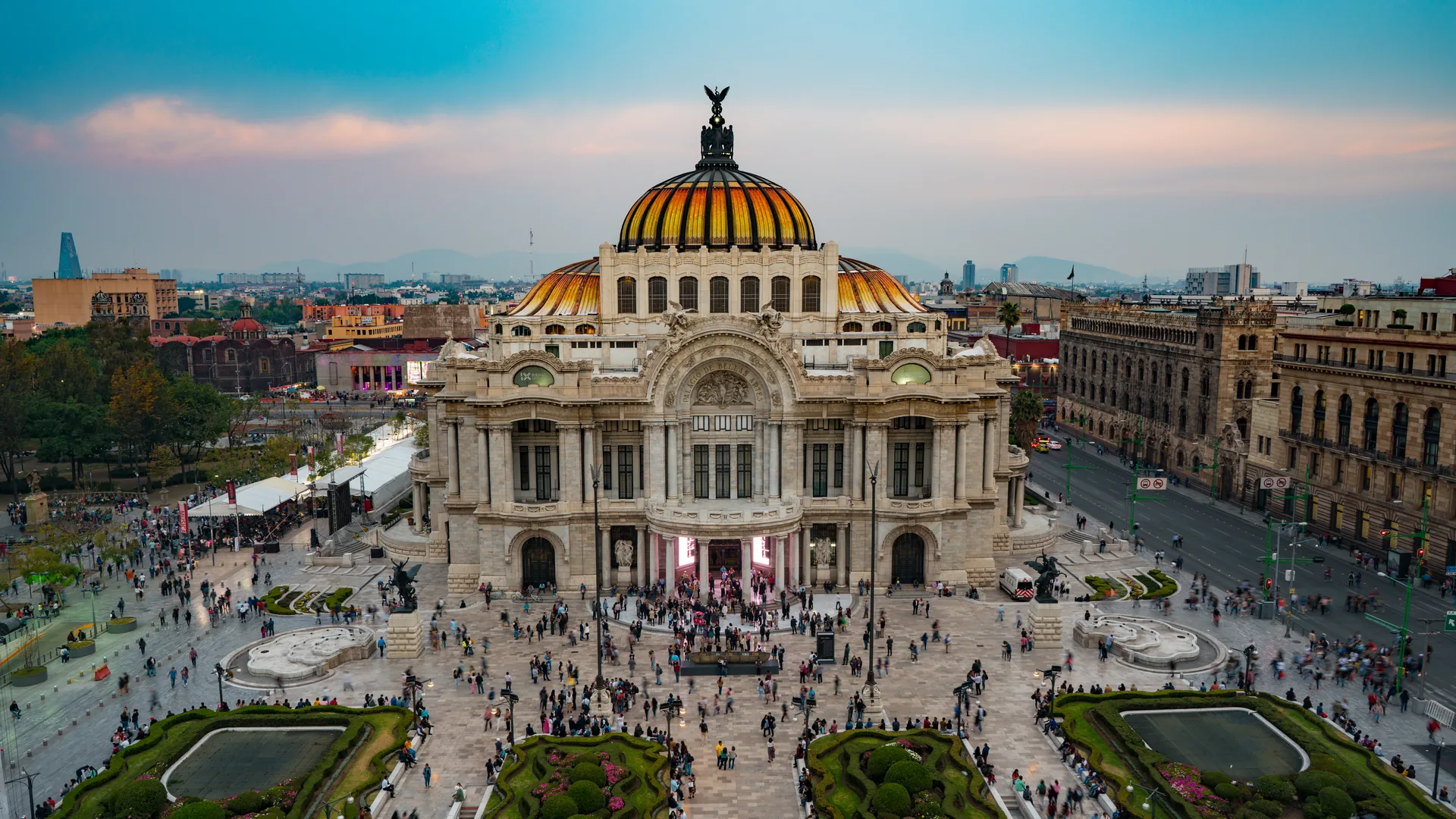
Italian architect Adamo Boari began the Palacio in 1904; construction stalled during the Mexican Revolution, and Mexican architect Federico Mariscal resumed and completed it, with the building opening on 29 November 1934 — three decades after ground was broken.
Art Nouveau outside, Art Deco within
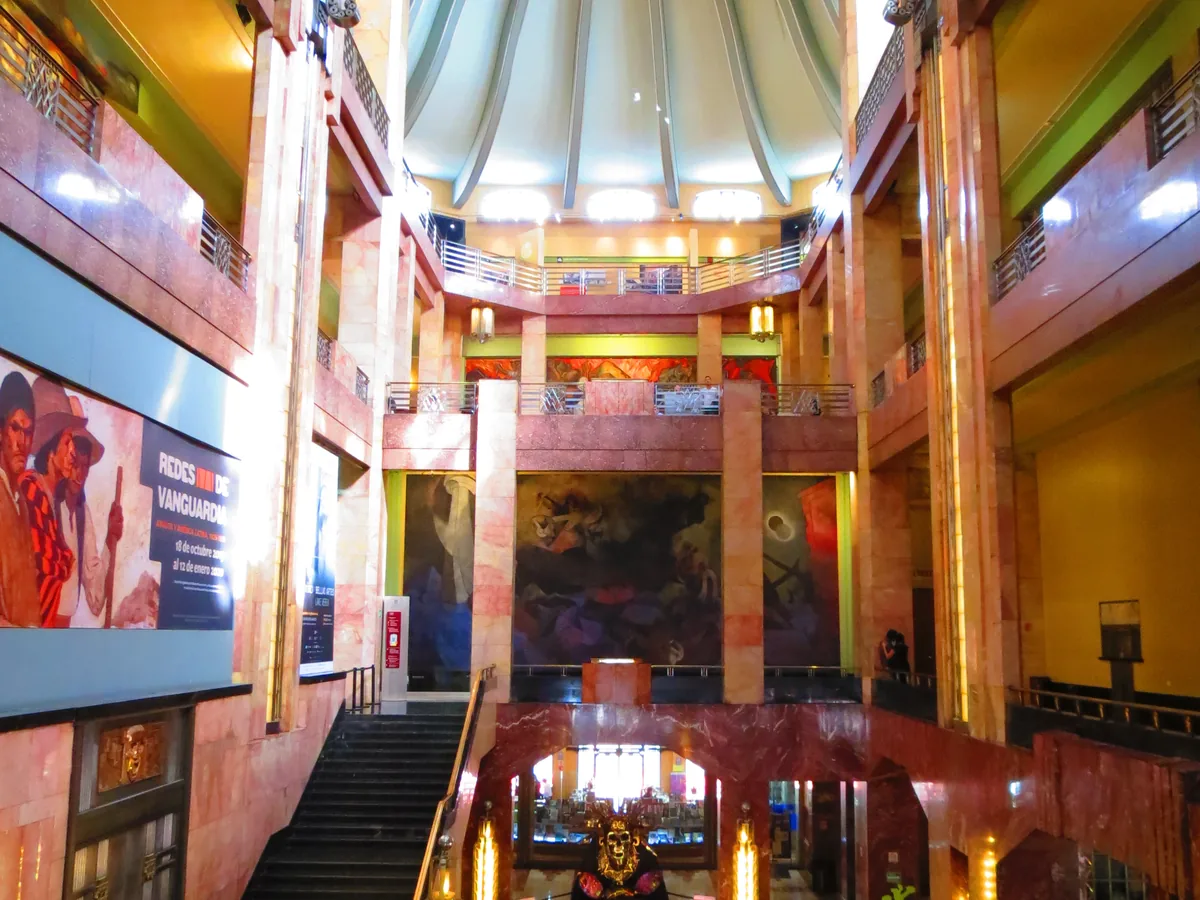
The exterior is white Carrara and Italian marble in an Art Nouveau and Neoclassical style, capped with an orange-and-cream tiled dome; step inside and the interior shifts to Art Deco, finished in rose-toned Mexican marble.
Tiffany's glass curtain
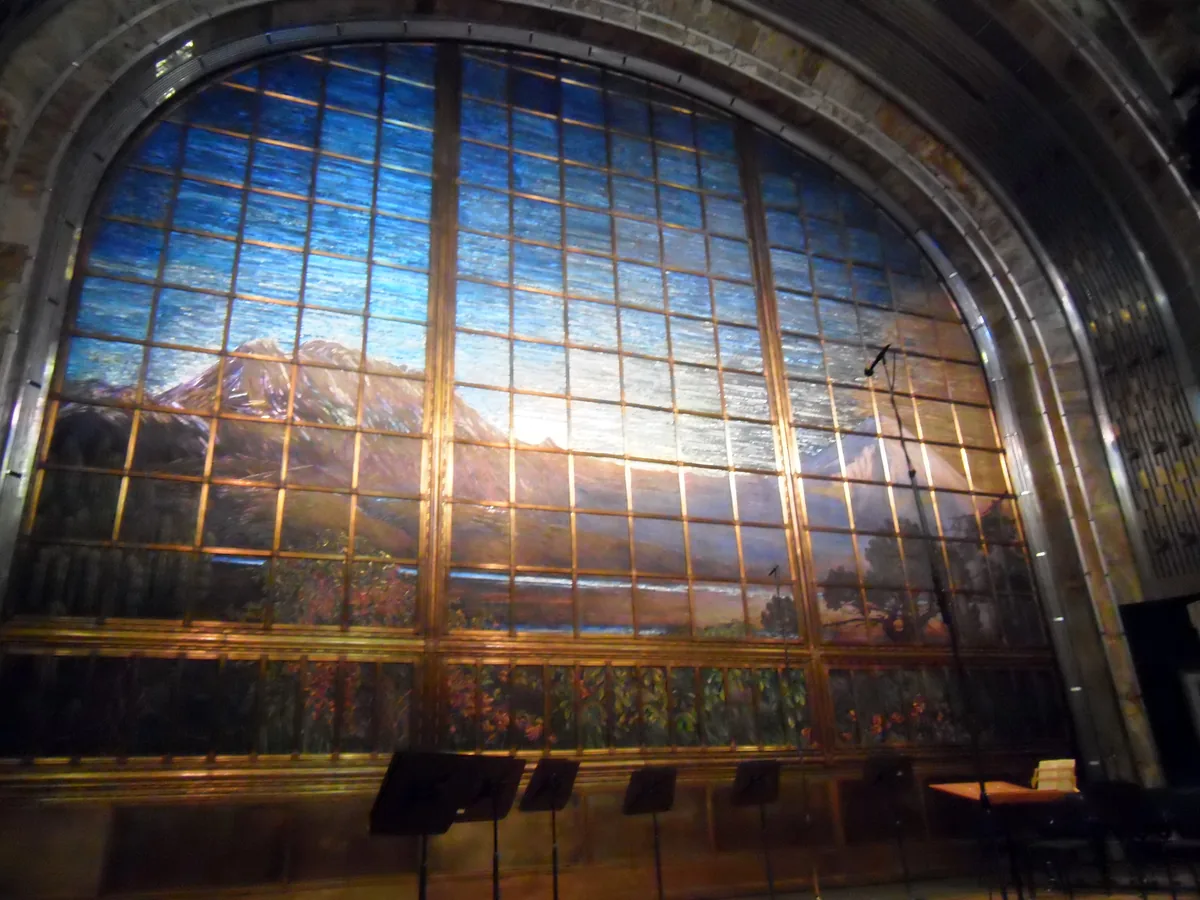
The main theatre's stage curtain is a 24-tonne stained-glass mosaic made by Tiffany Studios in New York, depicting the volcanoes Popocatépetl and Iztaccíhuatl over the Valley of Mexico — reported to be the only curtain of its kind in any opera house in the world, and lit from behind before certain performances.
Murals by Mexico's biggest names
The upper floors carry murals by Diego Rivera, David Alfaro Siqueiros, José Clemente Orozco, Rufino Tamayo and Jorge González Camarena — meaning most folklórico visitors are walking past major 20th-century Mexican art on the way to their seats, whether they planned to or not.
The palace and the dance, in pictures
The palace and the dance, in pictures
A closer look at the building and the folklórico tradition it hosts, before you book.
What's included
What's included
This listing bundles the two things most visitors have to arrange separately — the ticket and the ride.
Round-trip hotel pickup
Transport from your central Mexico City hotel to the Palacio and back is included, so you're not navigating an evening taxi or rideshare in an unfamiliar downtown after dark.
Your theatre seat
Entry to the performance in the Palacio's main theatre — the same 1,590-seat room with the Tiffany curtain described above.
The full programme
The complete roughly two-hour performance, typically moving through several of Mexico's dance regions with live orchestral accompaniment throughout.
Ways to book the folklore ballet
Find a folklore ballet date for your trip
Every option below is bookable through GetYourGuide, with live availability and the final price shown in your own currency before you pay.
Wednesday evening or Sunday — which to book
Wednesday evening or Sunday — which to book
| Show date | What to expect | Best for |
|---|---|---|
| Wednesday evening | An after-dark performance, the Palacio lit up outside, often paired with dinner in the historic centre beforehand | Visitors who want the theatrical, evening-out version of the night |
| Sunday | Fits naturally alongside a Sunday spent in the historic centre and its markets | Visitors building a full day around the Zócalo and downtown Mexico City rather than a single evening |
Planning your visit
Planning your visit
What to wear
The Palacio is a formal theatre inside a national monument — smart-casual is the practical minimum, and many visitors dress a notch up for the evening performance. We haven't seen an official dress code published for this specific listing, so if unsure, lean smarter rather than casual.
Wednesday evening vs Sunday
The two usual weekly performance days give a genuinely different evening: a Wednesday night show sits after a full day of sightseeing, while a Sunday performance can anchor a day already built around the historic centre. Confirm which specific date and time you're booking at GetYourGuide checkout — schedules can shift around public holidays.
Pickup timing
Because hotel pickup is included, your exact collection time is set by your booking and your hotel's location rather than a single fixed hour for everyone — check the confirmed pickup window on your voucher rather than assuming a generic showtime.
Around the Palacio itself
The building also houses the Museo del Palacio de Bellas Artes and the murals mentioned above; if your pickup allows any flexibility, arriving a little early to see the murals and the vestibule before the show is worth the extra time.
How far ahead to book
Because the show runs on fixed weekly dates rather than a daily schedule, and the theatre's better seats are finite for any one performance, booking a few days ahead of your target date — earlier around Mexican public holidays and peak tourist season — gives you a real choice of seats rather than whatever's left.
Planning your Mexico City trip
Planning your Mexico City trip
Palacio de Bellas Artes: the Tiffany curtain, the murals, and what else is inside
A marble Art Deco palace three decades in the making — here's what's actually inside it, beyond the folklore ballet.
Read more → The danceBallet folklórico, explained: what you're actually watching
One art form, six regions — here's what separates a folklórico stage performance from a village fiesta.
Read more → Planning your nightWhen the Ballet Folklórico performs — and how to pick your night
The company dances at the Palacio several times a week. Here's how the schedule works and what to check before you commit to a date.
Read more → Your seatWhere to sit at the Palacio de Bellas Artes: seating, sightlines and what your ticket covers
The main theatre holds fewer than 1,600 across several levels. Here's how the tiers compare and what to expect from your booking.
Read more → The companyAmalia Hernández and the Ballet Folklórico de México
How one choreographer's 1952 company grew into Mexico's most-travelled cultural export.
Read more → Around the showA day in Mexico City's historic centre around your Ballet Folklórico evening
The Palacio sits at the edge of the Centro Histórico. Here's what's within walking distance to build into the same trip.
Read more →GEO/FAQ
Mexican Folklore Ballet questions
What is the Mexican Folklore Ballet at the Palacio de Bellas Artes?
It's a live folklórico dance performance staged in the main theatre of the Palacio de Bellas Artes, Mexico City's Art Deco/Art Nouveau performing-arts palace. A company performs choreographed versions of Mexican regional folk dances — the tradition popularised from 1952 by choreographer Amalia Hernández — with live orchestral music, elaborate regional costume, and a running time of roughly two hours. This specific booking bundles the theatre ticket with round-trip hotel pickup.
Which days does the show run?
Folklórico performances at the Palacio run on fixed weekly dates rather than every day — Wednesday and Sunday are the usual show days, though the exact schedule can shift around public holidays. Your specific date and time are confirmed at GetYourGuide checkout, not fixed by this page.
What will the performance actually include?
Expect a programme that moves through several of Mexico's distinct dance regions in one evening — pieces drawn from a canon that typically includes Jalisco's Jarabe Tapatío, Veracruz's son jarocho, Michoacán's Danza de los Viejitos, and similar regional showpieces — performed with live orchestral accompaniment. The exact running order varies by performance date.
What is the Tiffany glass curtain?
It's the Palacio's main theatre stage curtain: a roughly 24-tonne stained-glass mosaic made by Tiffany Studios in New York, depicting the volcanoes Popocatépetl and Iztaccíhuatl over the Valley of Mexico. It's reported to be the only curtain of its kind in any opera house in the world, and it's visible from your seat before and after the performance, not just during scene changes.
Is hotel pickup really included?
Yes — this listing includes round-trip transport between a central Mexico City hotel and the Palacio de Bellas Artes, alongside the theatre ticket. Your exact pickup time and point are confirmed on your booking voucher, since they depend on your hotel's location and your specific show date.
What should I wear?
The Palacio is a formal national-monument theatre, so smart-casual is a sensible minimum and many visitors dress up further for the evening performance. We haven't seen an official dress code published for this specific listing — if you're unsure, err smarter rather than more casual.
Is the price shown final, and how does booking work?
You book through GetYourGuide, which shows the final price in your own currency before you pay and states the cancellation policy for your specific date up front. We're an independent guide to booking this experience, not the Palacio de Bellas Artes, INBA, or any dance company; the booking itself is handled by GetYourGuide's secure checkout.